Piano Removals in South Kensington
Careful, local piano moving services for homes and businesses

If you are planning Piano Removals in South Kensington, you already know this is not a task to leave to chance. Pianos are heavy, valuable, and often awkwardly shaped, but they are also delicate instruments with vulnerable internal parts. A successful move needs more than brute strength: it requires planning, protective equipment, the right lifting techniques, and a team that understands both the instrument and the local area.
South Kensington presents its own challenges and opportunities. The area is known for elegant period properties, mansion blocks, basement apartments, mews-style homes, museum-adjacent commercial spaces, and busy streets where access can be tight. Whether you are moving a family upright piano from a first-floor flat, relocating a grand piano from a townhouse, or arranging a business move for a school, studio, or venue, a local specialist service can make the process far smoother. That means less stress for you and better protection for the piano.
Our approach is designed for real customers who need a dependable local service, not a one-size-fits-all van and a pair of gloves. We focus on safe handling, clear communication, and practical planning so your move fits around the realities of South Kensington living and working.
Why piano removals need specialist care

Pianos are not simply another item of furniture. Even a modest upright can weigh several hundred kilograms, while a grand piano may require dismantling, padding, lifting, and careful transport planning. Inside the casing, there are strings, hammers, keys, pedals, and other components that can be affected by sudden jolts, vibration, or poor handling. The exterior finish can also be easily marked if it is not wrapped and secured correctly.
People often underestimate the difficulty because a piano may seem manageable when standing still. In practice, the move usually involves navigating stairs, narrow landings, sharp turns, door frames, shared hallways, lifts with limited capacity, and possibly street-level obstacles such as parked cars or restricted loading space. If you are in a South Kensington flat, townhouse, or commercial building, these issues can appear quickly and unexpectedly.
That is why specialist piano removals are so important. A trained team will assess the instrument, the property, and the route before any lifting begins. They will decide how many movers are needed, what protective materials should be used, and whether additional equipment is necessary. In many cases, the difference between a difficult move and a smooth one is careful preparation.
Local knowledge matters in South Kensington

South Kensington is a distinctive part of London, and a local team benefits from understanding its layout and building types. The area includes beautiful period conversions, white-fronted terraced homes, embassy-adjacent properties, managed apartment buildings, and commercial premises near major cultural destinations. Each setting creates different access conditions for piano transport.
Parking and loading can be a major issue. In some streets, waiting time, limited stopping space, or residential permits can affect the timing and route of the move. In buildings with concierge desks, lift restrictions, or protected flooring, the moving team must coordinate carefully. A local piano moving service is better placed to anticipate these details and work around them efficiently.
For customers in South Kensington, nearby areas such as Chelsea, Knightsbridge, Earl’s Court, Gloucester Road, and Kensington often have similar access considerations. That is one reason residents, landlords, agents, schools, and business owners tend to value a mover who already understands the area. Local familiarity saves time, reduces disruption, and helps protect both the piano and the property.
What our piano removal service includes
A practical service built around safety and convenience
Every move is different, but a well-planned piano removal service will usually include a number of key steps. These are designed to protect the instrument, the building, and the people involved.
- Initial discussion of the piano type, access, and destination
- Planning for stairs, lifts, tight corridors, or awkward corners
- Protective wrapping and padding for the instrument
- Use of piano skids, straps, dollies, blankets, and other moving equipment where appropriate
- Careful lifting and controlled movement by a trained team
- Protection for floors, walls, banisters, and door frames if needed
- Loading, transport, and safe unloading at the destination
- Placement of the piano in the requested room or position where feasible
Depending on the specifics of the job, the service may also involve partial dismantling of a grand piano, temporary removal of legs or pedals, or coordination with building management. In buildings with limited space, the team may need to measure routes in advance and determine whether extra manpower or special equipment is required.
We also understand that many customers want a move handled with as little disruption as possible. If your piano is in a busy family home, a teaching studio, or a business environment, the move should be planned to suit your schedule and minimise inconvenience.
Types of pianos we move
Uprights, grands, digital pianos, and more
Different piano styles bring different challenges, and the moving method should match the instrument. South Kensington customers often contact us about a wide range of piano types, including smaller domestic instruments and larger professional models.
- Upright pianos - common in flats and family homes, they still need careful handling because of their weight and height.
- Grand pianos - these require specialist preparation, controlled dismantling, and secure transport to prevent damage.
- Baby grands and concert grands - larger instruments need more space, more planning, and often more movers.
- Digital pianos and stage pianos - lighter than acoustic models, but still vulnerable to damage if not packed and transported correctly.
- Player pianos or antique instruments - these can require extra care because of their age, value, or custom components.
Whether your instrument is a modern upright in a compact apartment or an heirloom grand piano in a townhouse drawing room, the same principle applies: the move must be suited to the piano, not forced into a generic process.
If you are unsure what type of move you need, a short discussion is often enough to identify the best approach.
How the moving process works
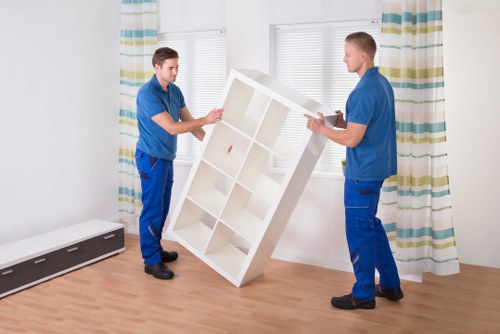
A professional piano removal service should feel organised from the first conversation to the final placement. Here is how the process usually works when you arrange piano removals in South Kensington.
1. Initial enquiry and details
The first step is to share the basics: piano type, current location, destination, floor levels, access points, and any special concerns such as narrow stairs or limited parking. The more detail you can give, the easier it is to plan properly.
2. Route and access planning
The team assesses the best way to move the piano safely. This includes measuring doorways, identifying turns or steps, and determining whether the piano should be wrapped, partially dismantled, or moved with additional help.
3. Preparation on moving day
Before lifting begins, the instrument is secured and the route is protected if necessary. This stage may involve floor coverings, wall protection, and careful positioning of equipment. In South Kensington properties with polished floors or shared entrances, this step matters a great deal.
4. Lifting and transport
The piano is moved by trained handlers using coordinated lifting techniques. The vehicle is then loaded safely, with the piano secured to minimise movement during transit.
5. Delivery and placement
Once the piano reaches the destination, it is unloaded carefully and positioned where needed. If you have a preferred room or corner, the team will place it as access allows. In many cases, customers appreciate having the instrument set in its final location without having to move it again themselves.
Throughout the process, communication is important. You should feel informed, reassured, and clear about what will happen next. That is especially useful when moving into or out of a busy South Kensington building where timing and access may need to be flexible.
Preparation checklist for customers
Simple steps that help the move go smoothly
Good preparation can make a real difference on moving day. While the specialist team handles the lifting and transport, there are several things you can do in advance to make the process easier and safer.
- Measure the available space at both properties if possible
- Tell the team about stairs, lifts, steep steps, or narrow entrances
- Let the building management or concierge know if access needs to be arranged
- Clear the path to the piano, including hallways and corridors
- Remove small objects, sheet music, stands, and accessories from the area
- Check whether parking or loading restrictions may affect the timing
- Keep pets and children away from the moving route on the day
- Decide in advance where you want the piano placed at the destination
If your piano is especially old, valuable, or recently tuned, you may also want to think ahead about room conditions and timing. Changes in temperature and humidity can affect acoustic instruments, so it can help to place them in a stable environment away from direct heat sources or damp areas.
For many South Kensington households, these small steps make the difference between a smooth move and an unnecessarily stressful one. They also help the moving team work more efficiently, which is always useful in a busy London neighbourhood.
Pricing factors for piano removals
What influences the cost of the service
Customers often want to know what affects the cost of piano removals. While exact pricing depends on the details of each job, several common factors usually shape the quotation.
Key pricing factors include:
- Type and size of piano
- Distance between collection and delivery points
- Number of stairs, floors, or level changes
- Whether a lift is available and suitable
- Parking and access complexity in South Kensington
- Requirement for dismantling or reassembly
- How many movers and what equipment are needed
- Whether floor or wall protection is required
- Timing, such as weekend or out-of-hours arrangements if available
Rather than relying on a rough guess, it is better to request a tailored quote based on your specific situation. That gives you a clearer picture of the work involved and helps avoid surprises later. If you are comparing options, make sure you are comparing like-for-like service details rather than just looking at a headline figure.
Request a free quote when you are ready, and provide as much detail as you can. A precise description helps the team give you the most relevant estimate for your piano move.
Why choose a local company for South Kensington?

There are many reasons to choose a local team for Piano Removals in South Kensington. The most important is practical experience. Local movers understand how to work in the area’s residential blocks, townhouse conversions, commercial properties, and busy streets. They know that a move near Exhibition Road is not the same as a move from a quiet ground-floor property, and they plan accordingly.
Local knowledge is especially useful when a move involves shared entrances, basement access, or limited stopping space. It can also help when handling more delicate jobs such as moving a grand piano into a music room, transferring an upright into a teaching space, or taking an instrument out of storage and into a new home. A local company is more likely to be prepared for these everyday London complications.
Choosing a nearby service can also make communication easier. If there is a scheduling issue, building access question, or last-minute detail to clarify, a local mover is usually better positioned to respond efficiently. That matters for customers who need a dependable and well-organised service without unnecessary delays.
For residential customers, peace of mind is often the priority. For commercial customers, the focus may be timing and minimal disruption. In both cases, a local specialist brings the kind of familiarity that helps the job run more smoothly from start to finish.
Residential and commercial piano moves
Serving homes, schools, studios, and other local spaces
South Kensington has a mix of private homes and professional premises, and piano moves in the area often involve both. Residential customers may be moving house, rearranging a room, replacing flooring, or taking the piano to a new address. Commercial customers may need help with a school, practice room, performance venue, office, church, or hospitality space.
Each setting brings different priorities. In a home, the challenge may be protecting the hallway and managing stairs without disruption. In a commercial setting, the focus may be on timing the move around opening hours, lessons, rehearsals, or appointments. Either way, the piano must be moved safely and with minimal interruption.
Some customers also need help with temporary relocations during renovations, decorating, or property maintenance. Others are moving instruments into storage before a refurbishment or after a change in use. These situations can be handled carefully when the move is planned around the condition of the piano and the access available.
Book your service now if you need a careful, well-organised move tailored to your property type and schedule.
Areas covered around South Kensington
Nearby locations commonly served
Although this page focuses on South Kensington, many customers also need piano transport to or from nearby parts of central and west London. A locally experienced team is often able to help with moves connected to surrounding neighbourhoods and adjoining districts.
- Chelsea
- Knightsbridge
- Kensington
- Earl’s Court
- Gloucester Road
- Brompton
- West Brompton
- High Street Kensington
If your move involves more than one of these locations, it is especially important to plan for access, parking, timing, and the route inside each property. This is another reason local piano moving services are so useful: they are accustomed to linking properties across nearby London postcodes without treating every job as identical.
Whether you are moving within South Kensington or between nearby areas, the key is to work with a team that understands local access conditions and can adapt to the property, not the other way around.
Common questions about piano removals
FAQs from South Kensington customers
Can a piano be moved up or down stairs?
Yes, in many cases it can. The method depends on the piano type, the stair layout, and the number of movers required. Tight turns or narrow landings may require special planning or dismantling for a grand piano.
Do I need to tune the piano after the move?
It is often a good idea to have the instrument checked after relocation, especially if it has travelled a distance or experienced a change in temperature and humidity. Many customers allow time for the piano to settle before arranging tuning.
Can you move a piano within the same building?
Yes. Internal moves are common, whether the piano is going from one room to another, up or down a floor, or into storage during renovation work.
What if my building has a lift?
A lift can help, but it still needs to be suitable for the piano’s size and weight. The team will assess whether it is practical and safe to use.
Do I need to prepare the route myself?
You do not need to do the lifting, but clearing the route and flagging access issues in advance is very helpful. The more the movers know beforehand, the better they can plan.
Can antique or high-value pianos be moved safely?
Yes, provided the move is handled by a specialist team with suitable packing, lifting, and transport methods. Extra care is particularly important for older instruments and custom finishes.
What makes a good piano removal service?
Practical qualities to look for
When choosing a service for piano removals in South Kensington, customers should look for more than just availability. A good service is organised, careful, and realistic about what the move involves. It should ask relevant questions, explain the process clearly, and help you understand what will happen on the day.
Helpful qualities include:
- Experience with both upright and grand pianos
- Careful assessment of access and property layout
- Clear communication before moving day
- Proper protective equipment and safe lifting methods
- Respect for homes, shared buildings, and commercial premises
- Flexibility when access or timing needs to be adjusted
It is also useful when the team is honest about any limitations. For example, if a route is too narrow, a lift is not suitable, or extra movers are required, you want to know that in advance. That kind of transparency helps customers make better decisions and prevents problems during the move.
Book your piano move with confidence
Moving a piano in South Kensington does not have to be stressful. With the right planning, careful handling, and a local team that understands the area, the process can be managed in a calm and organised way. Whether you are moving a beloved family upright, a grand piano for a performance space, or an instrument for a renovation project, specialist support makes a real difference.
We help customers who want a service that is practical, respectful, and suited to London properties. From first enquiry through to delivery, the aim is to make the move as smooth as possible while protecting the piano and the building along the way. If you need advice about access, timing, or the kind of preparation required, a quick discussion can help clarify the next steps.
Contact us today to discuss your move, request a free quote, or book your service now if you are ready to arrange your piano removal in South Kensington.
Helpful reminder
Plan early if your move involves stairs, restricted parking, or a large instrument. A bit of advance notice can make scheduling easier and ensure the right team and equipment are available.
Final note
For customers in South Kensington and nearby areas, a specialist piano move is about more than transport — it is about care, precision, and peace of mind.